
Inconsistent hipot testing results can bring production to a halt. You run a test, the cable passes. You run it again moments later, it fails. This scenario frustrates test engineers across the aerospace and defense industry, and it often signals an underlying issue that has nothing to do with the wire harness itself.
DIT-MCO's automated wiring analyzers help isolate these problems quickly. The following guide walks you through a step-by-step troubleshooting process to identify the root cause of inconsistent dielectric breakdown results and restore repeatability to your test station.
Quick Guide: How to Fix Inconsistent Hipot Test Results in 7 Easy Steps
- Verify Test Equipment Calibration: Confirm your wiring analyzer is calibrated and operating correctly before testing.
- Inspect Adapter Cables and Fixtures: Check for wear, damage, or contamination that could cause variable contact resistance.
- Evaluate Grounding and Shielding: Ensure proper earth grounding to prevent stray currents from affecting measurements.
- Control Environmental Conditions: Monitor temperature and humidity levels in the test area to reduce moisture-related failures.
- Review Test Program Parameters: Validate voltage levels, dwell times, and current limits match your specifications using DIT-MCO's NETS software.
- Isolate the Device Under Test: Test the harness independently from fixturing to determine if the fault originates in the DUT.
- Document and Analyze Patterns: Record results systematically to identify whether failures correlate with specific connectors or conditions.
How to Troubleshoot Inconsistent Hipot Testing Results
1. Verify Test Equipment Calibration
Your first step should confirm that the wiring analyzer itself is functioning correctly. Even well-maintained equipment can drift out of specification over time, particularly the high-voltage generation circuits used during dielectric testing.
Run a self-test routine on your analyzer with no device connected. If the system reports a hipot failure with open leads, the problem lies in the tester or its internal connections rather than your cables. For DIT-MCO wiring analyzers, the diagnostic function helps confirm internal circuit integrity.
Check the calibration date on your equipment. Most facilities require annual calibration, but high-use environments may need more frequent verification to maintain measurement accuracy.
2. Inspect Adapter Cables and Fixtures
Adapter cables are a frequent source of inconsistent test results. The cables connecting your tester to the device under test experience repeated mating cycles, physical stress, and environmental exposure. Over time, connector pins can loosen, insulation can degrade, and internal conductors can develop intermittent connections.
Remove all interface cables from the test setup and visually inspect each one. Look for bent pins, cracked housings, or discoloration around connector shells that might indicate overheating. Even microscopic damage to pin contacts can create variable resistance paths that cause inconsistent readings.
Clean connector contacts with appropriate solvents if contamination is suspected. Flux residue, fingerprint oils, or airborne particulates can create conductive paths that interfere with high-voltage measurements.
3. Evaluate Grounding and Shielding
Proper grounding is essential for accurate hipot testing. Stray currents, electromagnetic interference, and ground loops can all introduce variability into your measurements. The effect becomes more pronounced when testing at higher voltages or when working with shielded cable assemblies.
Verify that your test station has a dedicated earth ground connection. The ground path should be direct and low-impedance, avoiding shared connections with other equipment that might introduce noise. Test the ground continuity from your analyzer chassis through the fixture to the test station frame.
For harnesses with shields, confirm that shield terminations are consistent across all test samples. A shield left floating during one test but grounded during another will produce different leakage current readings.
4. Control Environmental Conditions
Temperature and humidity have a direct impact on insulation resistance measurements. Moisture absorbed by insulation materials or deposited on connector surfaces creates alternate current paths that lower apparent insulation resistance. A cable that passes easily on a dry day may fail when humidity rises.
The test environment should maintain stable conditions, ideally below 50% relative humidity for high-voltage testing. If your facility experiences significant temperature swings, allow test samples to acclimate before running dielectric tests. Condensation can form on cold assemblies brought into warm environments.
Some aerospace specifications require environmental conditioning before hipot testing. Verify your test procedure accounts for these requirements if your results show patterns that correlate with weather conditions or time of day.
5. Review Test Program Parameters
Inconsistent results sometimes trace back to the test program itself. Voltage ramp rates, dwell times, and current trip thresholds all affect whether a given cable passes or fails. Small variations in how these parameters interact with specific cable characteristics can produce borderline results.
Using NETS software, review your test program settings. Confirm that the ramp-up time allows larger cable assemblies to charge fully before the measurement begins. Capacitive effects in long cables or assemblies with Y-capacitors can cause temporary current spikes during voltage application.
Check that your current limit provides adequate margin above the expected leakage. Setting the trip threshold too close to nominal values leaves no room for normal variation.
6. Isolate the Device Under Test
After ruling out equipment, fixtures, and environmental factors, focus on the wire harness itself. The goal is to determine whether inconsistent results stem from the DUT or from something in the test setup.
Test the harness using a different fixture if available. If the same inconsistency appears, the problem likely resides in the cable assembly. If results stabilize, the original fixture requires attention. According to industry guidance on hipot testing, limiting the number of retests on the same sample prevents stress-related damage that could mask the original failure.
When testing shielded cables, verify shield continuity separately from conductor-to-conductor tests. Intermittent shield connections often cause variable leakage readings that disappear when the harness is flexed or repositioned.
7. Document and Analyze Patterns
Systematic documentation transforms random failures into actionable information. Record not just pass/fail status but the actual leakage current readings, test sequence order, and any environmental data available. Over time, patterns emerge that point to specific root causes.
Look for correlations between failures and specific connectors, test points, or operators. If failures cluster around certain connector types, the issue may relate to contact geometry or material compatibility with your fixtures. DIT-MCO's TestAssistant II software stores test results in a database that supports this type of analysis.
Consider whether failures follow a time-based pattern. Results that degrade throughout a shift may indicate thermal drift in equipment or progressive contamination buildup on test fixtures.
What Causes False Hipot Failures in Automated Test Systems?
False failures occur when a good cable fails the hipot test due to factors unrelated to its actual insulation integrity. Understanding these causes helps you distinguish between genuine defects and test setup issues.
Capacitive coupling presents a common challenge. Cable assemblies with significant capacitance between conductors draw charging current when high voltage is applied. If your tester interprets this capacitive current as insulation leakage, the result is a false failure. Switching from AC hipot to DC hipot testing eliminates the continuous capacitive current component and often resolves these issues.
Fixture contamination ranks among the most overlooked causes. Test fixtures accumulate contamination from handling, airborne particles, and residue transferred from previous test samples. This contamination creates leakage paths within the fixture that add to the measured current. Regular fixture cleaning and inspection reduces false failures.
How Does Temperature Affect Hipot Test Repeatability?
Temperature influences both the equipment performing the test and the materials being tested. Insulation resistance decreases as temperature rises because higher thermal energy allows charge carriers to move more freely through dielectric materials.
For most polymer insulation materials, resistance drops by roughly half for every 10°C increase in temperature. A cable tested immediately after a warm assembly process may measure lower insulation resistance than the same cable tested after cooling overnight. This temperature dependence explains why morning test results sometimes differ from afternoon results in facilities without climate control.
Test equipment also responds to temperature changes. Electronic components in the high-voltage measurement circuits have temperature coefficients that affect accuracy. Allowing equipment to warm up and stabilize before beginning production testing improves result consistency.
How DIT-MCO Helps You Achieve Consistent Hipot Testing
DIT-MCO's automated wiring analyzers give you the precision and repeatability that aerospace and defense applications demand. With over 75 years of experience in harness testing, DIT-MCO understands the challenges you face when tracking down intermittent test failures.
The Model 2650 delivers high-voltage testing up to 2000 VDC and 1500 VAC, with measurement resolution that captures small variations in leakage current. The modular architecture lets you configure test stations that match your specific workflow, whether you need benchtop convenience or distributed switching for large assemblies.
NETS software simplifies test program development and provides tools for analyzing results across multiple test runs. The Failed-Test-Repeat function builds a list of failures that you can reload for targeted troubleshooting. This approach lets you recreate the exact conditions that caused a failure without running the entire test sequence again.
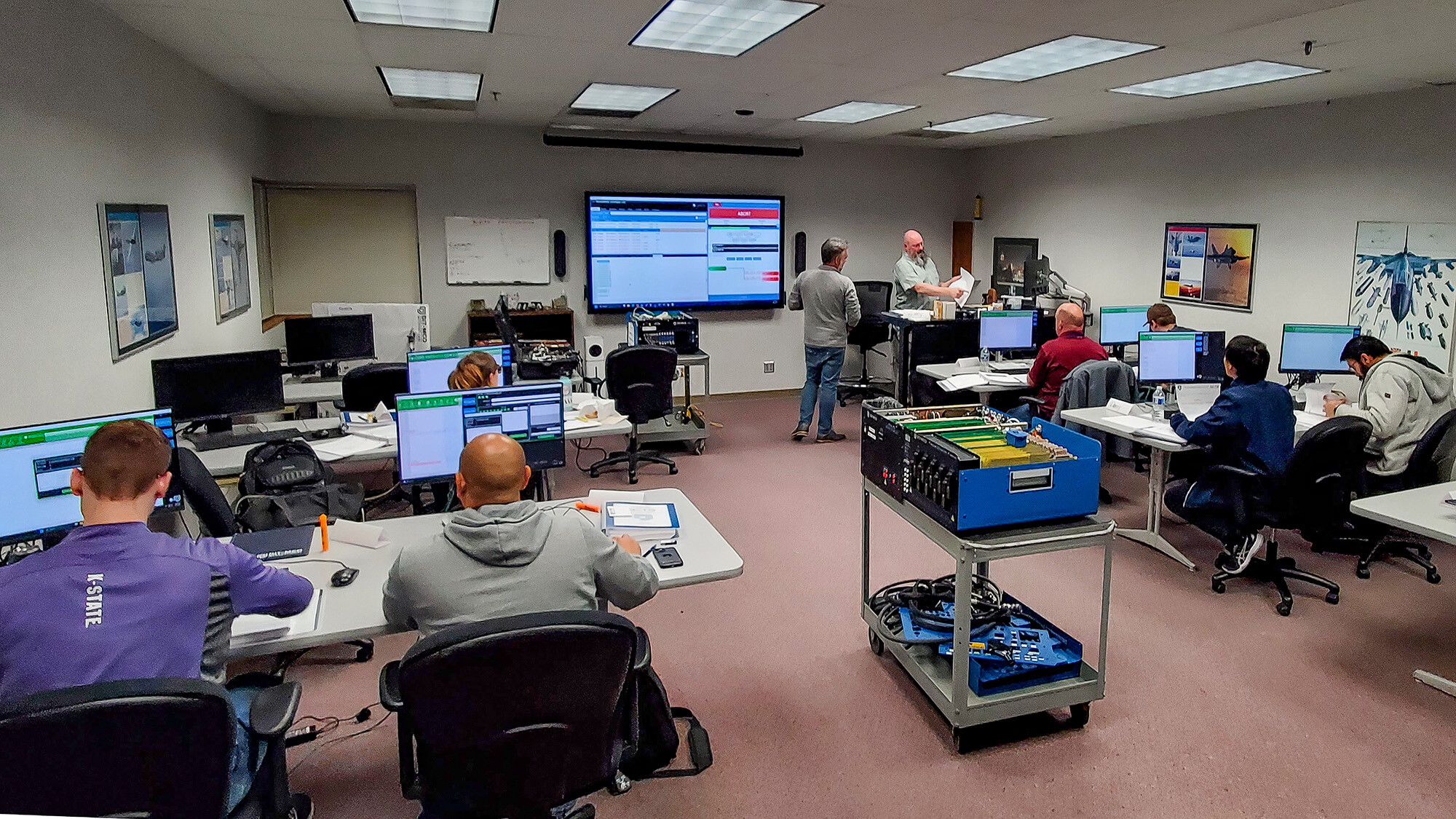
Training programs from DIT-MCO ensure your team can get the most from your test equipment. Contact us to discuss your testing requirements and discover how the right equipment and techniques can eliminate inconsistent results from your production floor.
FAQs About How to Troubleshoot Inconsistent Hipot Testing Results
What is the most common cause of inconsistent hipot test results?
Adapter cable and fixture problems cause the majority of inconsistent hipot results. Worn connectors, contaminated contacts, or damaged insulation within the test interface create variable current paths that affect measurements differently from one test to the next.
How often should hipot test equipment be calibrated?
Most quality systems require annual calibration for hipot test equipment. DIT-MCO wiring analyzers include self-diagnostic routines you can run between calibration cycles to verify proper operation. High-use environments may benefit from semi-annual calibration schedules.
Can humidity cause a good cable to fail hipot testing?
Yes, humidity directly affects hipot test results. Moisture absorbed into insulation materials or condensed on surfaces creates alternate current paths that increase measured leakage. Controlling relative humidity below 50% and allowing samples to acclimate improves test repeatability.
What is the difference between AC and DC hipot testing?
AC hipot testing applies an alternating voltage that continuously charges and discharges cable capacitance, adding capacitive current to the measurement. DC hipot testing charges the capacitance once and then measures only resistive leakage current. DIT-MCO analyzers support both methods, letting you choose the approach that matches your specifications.
How do I know if my adapter cables need replacement?
Replace adapter cables when you observe visible damage, intermittent continuity, or inconsistent test results that disappear with a different cable set. DIT-MCO's interface cables are built to withstand repeated use, but all cables have a finite service life determined by mating cycles and handling conditions.
Why do hipot results vary between test operators?
Operator-related variation typically stems from differences in cable positioning, connector mating force, or handling procedures. Standardizing the test setup process and providing operator training reduces person-to-person variability. DIT-MCO's NETS software guides operators through consistent test execution.
You May Also Like
These Related Stories